


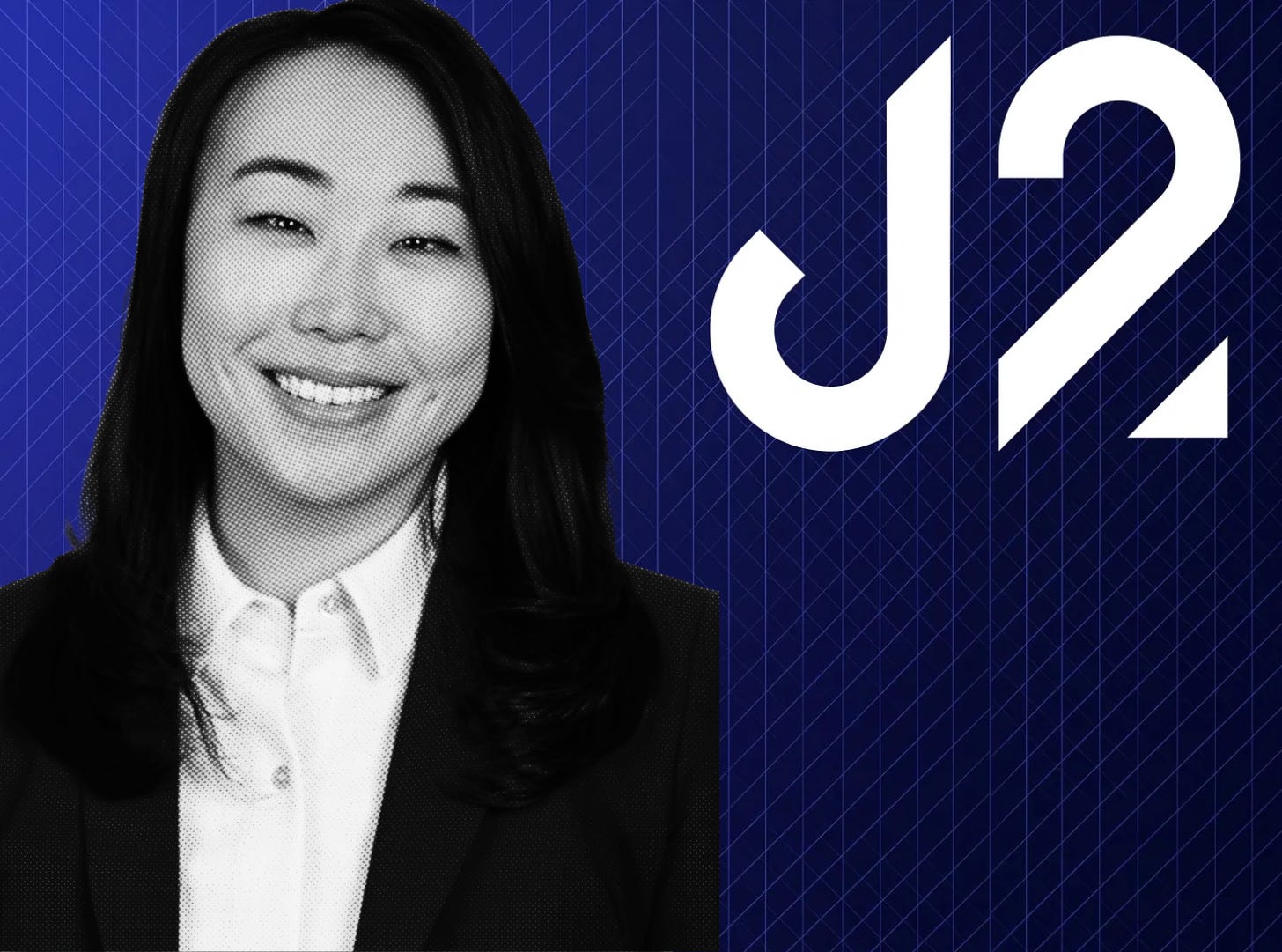
When Christine Keung was serving as Chief Data Officer for the City of San Jose during the pandemic, she needed a data lake. She wanted Snowflake. She couldn’t get it. The problem wasn’t budget. It wasn’t bureaucracy. The company simply wasn’t trying to sell to the government.
“I didn’t fully appreciate how much selling into the government, especially the Department of Defense, had become a cottage industry dominated by private equity-backed incumbents selling legacy technology. When I became a user and a buyer, I realized many of the core systems and vendors haven’t meaningfully innovated in 20+ years,” Christine said.
The most innovative technology companies in the world didn’t know how to access the largest enterprise buyer in the world: the U.S. government.
That disconnect is the problem J2 Ventures was built to solve. Christine has spent her career on both sides of the transaction. She has been a buyer of technology inside government and a builder of technology at companies like Dropbox and Figma. That dual perspective is the reason she saw the gap clearly enough to act on it.
Meet Christine
Before the Fulbright, before Bridgewater, before City Hall, Christine was employee number one at her parents’ Chinese restaurant in the San Gabriel Valley. She was 11 years old. The restaurant had seven tables, near-zero margins and no formal advertising budget.
What it did have was a kid who understood customer acquisition. Christine negotiated sponsorships with 10 local high school newspapers, trading catered holiday parties for free ad space and menu flyers tucked into newspaper folds. She incentivized Yelp reviews with free egg rolls. The restaurant eventually became the No. 1 most reviewed restaurant on Yelp in a fiercely competitive East Los Angeles dining scene.
“My parents always made me feel like my ideas mattered. I had a real seat at the table growing up, and they empowered me to think creatively, contribute to the business, and actually implement the ideas I believed in.”

That instinct carried forward through roles at Dropbox and Figma, a Fulbright in China and a stint at Ray Dalio’s Bridgewater Associates. Then the pandemic hit. Christine joined the Small Business Administration, where she worked on the $800 billion Paycheck Protection Program as the agency distributed unprecedented amounts of capital to small businesses across the country. It was there that she realized how much government funding existed for entrepreneurs and how poorly it was marketed.
That experience pulled her into public service full time. She served first at the SBA and then as Chief Data Officer for the City of San Jose, where she led data and technology teams and awarded contracts to companies building digital infrastructure for city services during COVID. Those two and a half years inside government changed her trajectory entirely.
“I would not have gone out, joined a general partnership at J2, raised this fund if I didn’t believe in the thesis. It was really my two and a half years in public sector, in government service that convinced me that what we do at J2 has to exist.”
Meet J2
J2 is a venture firm organized around a single thesis: dual-use technology. The firm backs commercial software companies and helps them expand into U.S. government markets. All four general partners have purchased billions of dollars of technology on behalf of the U.S. government. That background is rare in venture capital and central to how J2 wins deals and adds value after writing a check.
The portfolio is concentrated across telecommunications, advanced computing, cybersecurity and healthcare. But it doesn’t look like a typical defense fund. Half the portfolio resembles consumer and women’s health companies. The firm’s first investment was the Oura Ring.
“We don’t invest in pure defense companies. What surprises many people is that some of the most compelling technologies emerging through our military and government partnerships also have incredibly powerful applications in consumer health and women’s health.”
The Most Transparent Enterprise Customer Nobody Is Selling To
The Department of War alone has a $1 trillion budget and that is just federal defense spending. At the state and local level, the footprint is equally massive: state and local government alone accounts for 24 million jobs in the United States. By any measure, the U.S. government is the largest enterprise market in the world.
What surprises most founders, Christine argues, is how transparent that market actually is. Government buyers are required to post competitive bids publicly. Requests for proposals include problem summaries, budget allocations and, in many cases, the direct contact email of the program officer reviewing submissions.
“That level of accessibility barely exists in the private sector. If you’re trying to sell software to a product manager at a major tech company, even finding the right contact can be incredibly difficult. There are multi-billion dollar companies like Clay built around solving that problem.”
Beyond contracts, Christine is focused on helping founders access non-dilutive capital through programs like the Small Business Innovation Research grants administered by the SBA. These grants fund R&D for next-generation technology, from quantum computing to advanced GPS, without requiring founders to give up ownership. Christine believes most founders don’t know this capital exists.
“There is a ton of non-dilutive capital available to entrepreneurs through the government. There are grants, contracts, and funding programs that can be incredibly meaningful for startups. The government just does a very poor job marketing and packaging those opportunities to founders.”
Open-Minded and Assertive at the Same Time
Christine’s approach to evaluating founders was shaped in part by her time at Bridgewater Associates during the era of radical transparency. Every meeting was recorded. Every interaction was rated in real time through an internal app. Employees gave and received continuous feedback called “dots,” and each person carried a “baseball card” of aggregated ratings visible to the entire firm.
“Bridgewater approaches feedback like a big data problem. When you’re processing thousands of signals every week, you develop the discipline to identify patterns instead of over-indexing on any single comment or interaction.”
The principle Christine took from that experience, and the one she now uses as her primary filter for founders, is the ability to be “both open-minded and assertive at the same time.” She describes these as seemingly opposing traits whose continuous tension is the defining requirement for building anything difficult.
In practice, this means Christine looks for founders who hold deep conviction about their market and approach but remain open enough to absorb coaching and act on unstructured signals. She pushes founders to read cues beyond what is explicitly said: body language during customer calls, the outcome of a pitch, the patterns hiding in everyday interactions.
We Can’t All Be Whaling Ships
Christine is direct about what she sees as a structural problem in the venture ecosystem: there is too much venture capital in the market. She frames this through the origin story of the asset class itself. Venture capital was born in the New England whaling industry, where ships were financed with the expectation that most would fail but a single successful catch could return the entire fund.
“Historic levels of venture funding have created a market where even rowboats are financed like whaling ships. Not every company is built to absorb massive amounts of capital, and not every outcome needs to be a billion-dollar outcome.”
She grounds this concern in a specific historical example. During her Fulbright in China in 2014, Christine studied how the first wave of innovative solar companies were all backed by American venture capital. After the 2008 financial crisis, those VCs sold the assets to return capital to their limited partners. Chinese state-owned enterprises acquired the IP. China now controls 96% of the global solar market. The same pattern played out in batteries, telecommunications and critical minerals.
“Most of the core IP and innovation was originally developed in the United States, and it was American venture capital that funded the first generation of these companies. But many of those businesses were ultimately sold, in part because of the return expectations and incentives embedded within the venture model.”
Christine sees this history as part of what informs J2’s approach. When founders layer in government revenue and non-dilutive grants alongside venture capital, they build a more resilient capital base. As Christine put it, “Different forms of capital comes with different sets of expectations that inform the trajectory of your business.” The goal is to help founders avoid a structure where a single source of capital, and its return timeline, dictates the fate of the company.
Where Christine Is Looking Next
J2’s fastest-growing area of investment is workforce technology for the public sector. Christine and her partners have made at least three or four bets in HR, talent and reskilling. One of those is a company called Holly, which Christine describes as “basically Pave for state and local government.” The company helps government agencies hire more competitively. The broader thesis is straightforward: AI should not displace government workers. It should free them from administrative burden so they can do the work they were trained to do.
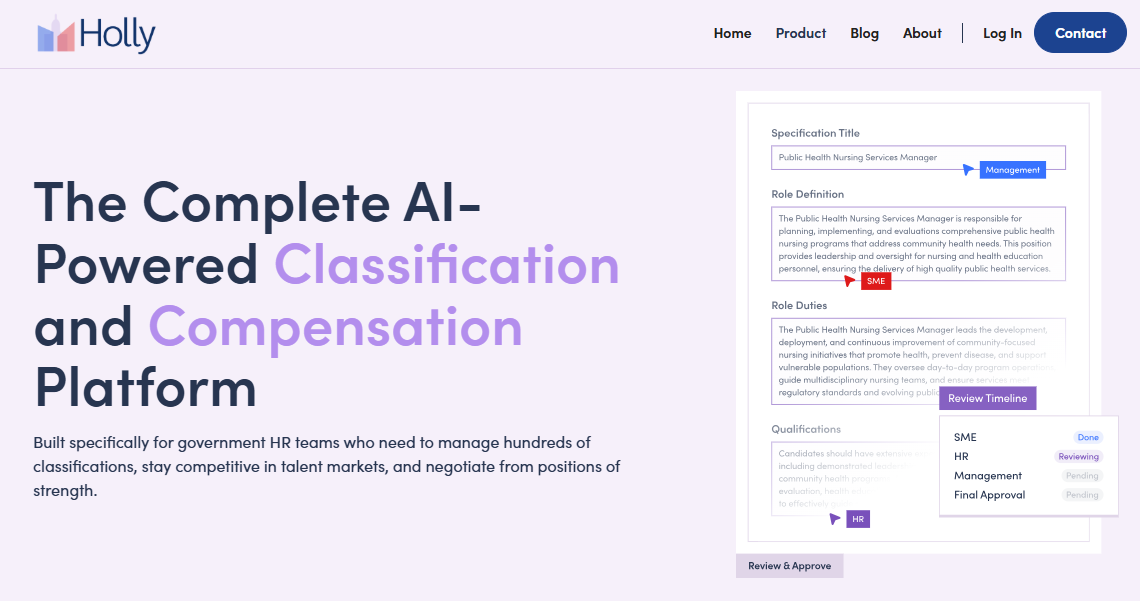
“Government work is fundamentally human work. You’re dealing with children, families, veterans, and people in moments of real need. But too often, public servants spend the majority of their time buried in administrative tasks, paperwork, and outdated technology instead of doing the work they were actually trained to do.”
Christine sees the future of government technology as a capacity problem. The 24 million state and local government employees in the United States are already there. The opportunity for AI is to remove the operational burden so they can spend more time serving people, not systems.
More from Uncovered Media


