


Connect with Jen
linkedin.com/in/richardjennifer
VC Uncovered’s View
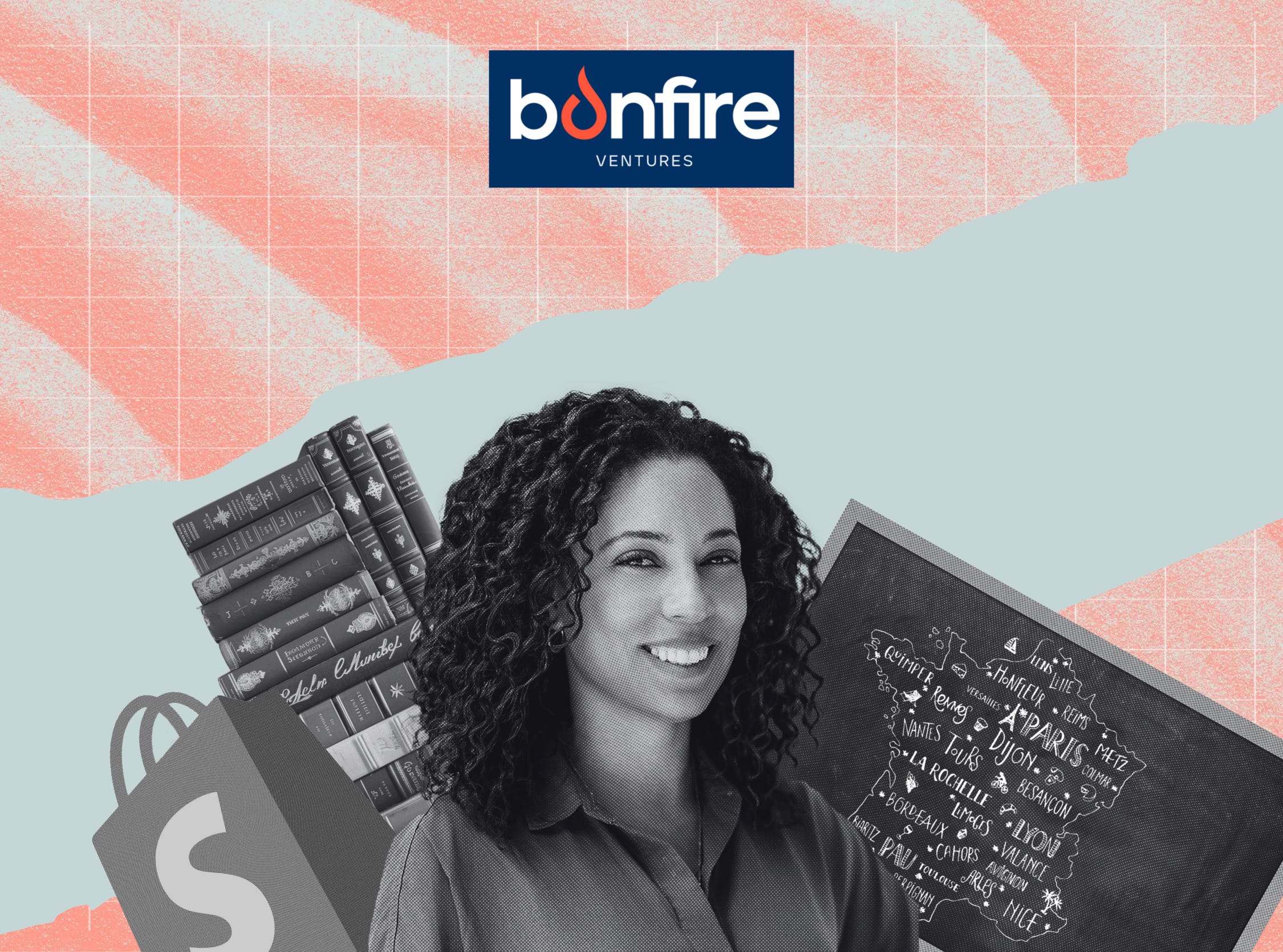
Jen Richard is a first-generation college grad who studied English Lit before starting her career teaching in rural France. Hers is the kind of non-traditional background we love to spotlight at VC Uncovered: investors who bring fresh perspective to the table.

Her defining experience stems from six years as an operator, building and scaling e-commerce startups from the ground up. This time in the trenches gave her a deep-seated empathy for the reality of startup life, allowing her to “feel the emotions of our founders’ wins and losses much more deeply.”

Jen’s operator-first DNA makes her a natural fit for Bonfire Ventures, a firm built entirely around hands-on, B2B software investing. Bonfire’s partners are former operators who lead 95% of their seed deals, take board seats, and stay involved for the long haul. It’s precisely what an investor with Jen’s experience is built to do.

What’s really admiring is Jen’s obsession with learning. She points out the e-commerce ecosystem she mastered in 2016 has since been fundamentally reimagined: a realization that fuels her belief that VCs must “always be on” or risk becoming irrelevant. She backs her relentless curiosity with the high-conviction mindset required at a firm managing a $245M seed fund, looking for founders with “big, hairy, audacious” plans.

Jen embodies this blend of genuine, hard-won operational empathy and the sharp, forward-looking focus needed to back world-changing companies.
Meet Jen
Q: You can be anywhere. Eating, drinking, and reading your favorite thing. What is it?
A: If I could be anywhere it would be on the beach in Antibes, eating pasta & drinking Sancerre.
Key Quotes
“Everything around us moves really quickly so you have to always be on; the moment you take your foot off the gas in this industry, you become irrelevant.”
“My exposure to the startup world as an operator helps me feel the emotions of our founders’ wins and losses much more deeply than the average person on their cap table.”
“Every investment I make, I believe, has the opportunity to return our $245M fund.”
“The feedback cycle for this business is so long that it really takes seven to ten years to know if you’re any good at it.”
“The best advice I received came from a mentor of mine who said, “The easiest way to get a job in VC is to have a job in VC.”
Original Responses (Lightly Edited for Clarity and Flow)
Background and Personal Journey
Experiences Shaping My Investment Approach
I grew up in LA and came from a working-class family, so not the traditional VC archetype. I’m a first-generation college grad; I went to Emory in Atlanta to study English Literature, which was the subject I excelled at growing up (and I placed in the 98th percentile for Verbal Reasoning on the GMAT). After graduating from college, I went abroad to teach English in France to rural high school students, and that was an amazing experience, but I quickly learned that I wasn’t cut out to be a teacher long-term.
I came back home looking for a job shortly after the global financial crisis and ended up landing on a desk at Creative Artists Agency. After getting promoted to the agent trainee program and spending three years at the agency, I decided to look for opportunities in the growing tech ecosystem that was popping up in LA and ended up getting a job at a start-up, so I left the entertainment agency for that role.
That led me to spend about six years at early-stage venture-backed startups—three different companies under the same group of founders. I took part in starting and scaling these companies, primarily in e-commerce functions. It was through this experience that I got exposure to VC.
After about six years operating, I decided to apply to business school and see if I could land a role in venture capital. I wanted to go to a school in the Bay Area to get maximum exposure to the SF ecosystem. That ultimately worked out for me as I ended up getting an MBA from UC Berkeley’s Haas School of Business. From there, I was able to get an internship at a firm called Cross Culture Ventures (now called MaC Venture Capital), and that went really, really well. It immediately clicked that VC was what I wanted to do for the long term, and it was the career path I wanted to pursue after I finished grad school. The rest is pretty much history.
The Operator Foundation
It was definitely my exposure to the startup world as an operator that gave me the most perspective on how I operate today as a VC.
First of all, it gave me a lot of empathy for the founder journey. I joined these companies as a member of the founding team. And so I was there when we were figuring out how to raise money to make payroll, and how to get our first customers and how to get our first website off the ground. Now, as an investor, I feel the emotions of our founders’ wins and losses much more deeply than the average person on their cap table.
On the other side of the coin, I also was able to get a lot of value from my time at Creative Artists Agency because I worked in the Speakers department. We were a little bit different from the rest of the agency, which is mainly film and TV focused. We actually represented a lot of tech founders, CEOs, authors and other influential innovators. Through that experience, I was able to see the other side through people who have really made it in their careers. My job was to listen to those on the other side share lessons and advice for how people who are up and coming can also be successful.
I was really lucky to have a career prior to VC that set me up for what I’m doing today, both at the infancy of a founder journey to the other side when they’ve seen big outcomes and success.
Moment Inspiring Venture Capital Career
My aha moment definitely came during my summer internship with Marlin Nichols at Cross Culture Ventures. When I was an operator, I always really loved what I was doing. I love e-commerce. I was very lucky to have a role that was both technical and operational, so I was always challenging myself. I was always solving really complex business problems that fed into each other, and I was very lucky in that I had control over a lot of different business units, whereas many people are often siloed. Even so, I always felt bored by more or less solving the same larger problem within a company.
When I went to business school, I was really hoping for some kind of aha moment where I would find a career that I could see myself doing long-term and have this constant sense of fulfillment that I had been missing. When I got my internship at Cross Culture Ventures, it was the first time in a long time that I was starting a job where I had no clue what I was doing. Even though I worked at venture-backed startups, I had no idea what it was like to actually be a VC. I studied for my interviews with other investors in my class who helped me learn the lingo and the terminology, but of course that can only take me so far.
Starting from day one, I was absorbing information like a sponge. I was lucky that Marlon let me do all parts of the job. I was sourcing companies, I was filtering inbound inquiries, I was doing diligence, I was attending events and doing speaking engagements, and in just eight weeks, I felt like I had learned everything and nothing at the same time. I knew I still had so far to go.
I was lucky to have had the opportunity to continue on at Cross Culture for my second year of business school, and at that point, I was finally getting a handle on the job. But I was so excited to be able to continue on this path full-time and figure out how to really master it.
It’s been seven years since that internship, and even though I’ve come a long way and feel so much more confident in what I’m doing, the feedback cycle for this business is so long that it really takes seven to ten years to know if you’re any good at it, even when you sometimes have early proof points. And that’s what I love so much about this job is that I am constantly learning. I’m constantly pushing myself. I’m constantly solving new problems, learning new industries, and trying to predict where the world is going in a way that I’ve never had to do in any of my previous roles. And so I see myself doing this forever. Every year I think I become a better professional, a better investor, and a smarter, more informed human. And that’s what I love so much about VC.
Best Advice Received
The best advice I got was very early in my career when I was recruiting for full-time roles in VC after business school. That advice came from a mentor of mine who said, “The easiest way to get a job in VC is to have a job in VC.”
When he told me that, it was really meant to be taken at face value. But now, looking back, it has become one of the north stars of how I represent myself in this career. VC is a job where things go stale really quickly—that can be networks, or deal sourcing pipelines, or understanding of innovation and technology. Everything around us moves really quickly so you have to always be on: always nurturing your relationships, always learning about new infrastructure and technologies (even outside of those you actively invest in, because everything tends to bleed into each other). The moment you take your foot off the gas in this industry, you become irrelevant.
An anecdote to this is that I spent six years operating an e-commerce. I was one of the early users of Shopify back in 2015/2016. When I first started in VC, that experience was extremely relevant because I really understood the e-commerce ecosystem. However, in the last several years, it’s been incredible to see how quickly that industry has evolved. If I were to log into Shopify as a store owner today, I’m not sure I would even recognize it. So much about the platform has evolved and gotten a lot better, to the point where many of the problems I had back then are solved.
And so I almost have to study e-commerce as someone completely on the outside now because so many new technologies have been invented since I was in it. The operator’s dilemma in this industry is that your startup experience will provide a lot of value by way of helping you understand the mechanics of running a company and an edge when it comes to understanding a certain industry, but you’re still required to learn at the same clip as everyone else because innovation happens so rapidly.
Philosophy and Insights
Investment Philosophy
My investment philosophy is that I write a high conviction check into software founders who are redefining a category in B2B. As a firm and personally, we don’t make a ton of bets. At Bonfire, we are investing out of a really large seed fund, and so that means that it’s really important to partner with founders who have a really big, hairy, audacious plan to attack a problem in a really large market. Every investment I make, I believe has the opportunity to return our $245M fund. When you do the math, we invest at seed and we expect to retain 10% ownership at exit. That has to be a really, really big outcome, and so I want to only partner with founders who have the passion and the grit to go after that type of opportunity.
Values When Working with Founders
In an industry where everything is quite literally driven by money, my values are something that I try to keep front and center in everything that I do. While I’m just as returns-focused as any other investor, I think it’s possible to invest in people and companies that are going to ultimately leave the world a better place than they found it.
One of the most important parts of partnering with a founder is integrity and trust. That’s something that I take very seriously on my end, and that I have a very high bar for when it comes to founders that we partner with. Trying to vet for this is a very important part of our diligence process.
At Bonfire, we tend to be a founder’s first call well beyond the seed stage. That is a privilege that we have to earn, and that I always strive to earn personally when partnering with my founders. I hope and expect to get good news as soon as it happens, and the same is true for bad news.
At the core of this, I hope to partner with people who take care of other people. This means:
Doing right by their customers
Being a great leader
Treating their employees well
Being honest and transparent with their investors
Having integrity when it comes to managing other people’s money
At the end of the day, our incentives can’t be more aligned—when our founders win, we do too. My aspiration for all of the founders I partner with is that we operate with respect for not only each other, but everyone around us as well. And that throughout the journey, everyone who is on it or has been involved is rooting for our success.
The Perfect Pitch
I think nailing the perfect pitch is actually pretty simple, but a lot of founders have a tendency to fall flat. The perfect pitch needs to include three key pieces:
Explain what your product or company does. There are so many founders that pitch me and at the end I still have no idea what you do. That’s a huge problem.
We need to understand your traction. If you have revenue, tell me about it. If you don’t, share data points that help me understand what your potential is or where you’re going.
Your excitement about what you’re doing should be infectious. Show that you’re passionate, show that you care about what you’re doing and show that it’s so important to you that when times get tough, you aren’t going to jump ship because that’s how committed you are to solving this problem.
Trends and Future Vision
Emerging Trends
There are a lot of different ways that I could answer this question. So maybe I’ll break it down into two parts. Of course, I have to start with generative AI. It is the biggest invention since the internet. And while there are a lot of dangers and things to be cautious about, there’s also so much that generative AI is doing to completely reshape the internet, reshape how people do business, and reshape how we as consumers consume technology.
Since I come from an eCommerce background, I will speak to how generative AI is reshaping the commerce landscape. I think that there are a few things that as an operator, I struggled through in that role of Head of eCom.
A few of them are:
Merchandising and making sure that the best products are in the right place when a consumer comes to our website. That’s now being completely re-imagined through generative AI where a consumer will come to a landing page or website and be shown products that are completely tailored to them based on previous browsing history and previous interactions. This is constantly refreshed based on who the consumer is. And so this is a win-win for both brands and consumers. For brands, it’s much higher conversion rates, a better experience for their customers. For consumers, you come to a website and find what you’re looking for immediately versus having to parse through pages.
The same can be seen with search. And this is not just on static webpages but with LLMs as well. Finally, the internet, which has been collecting our data for all this time anyway, is able to really understand the consumer or the user and tailor search and search results in a way that really gives consumers and users what they’re looking for the first time. And so I think that the way that we buy things is fundamentally going to change, and I’m really excited about that as well.
We can also see that through Agentic Commerce & being able to shop directly through LLMs, etc. Personalized commerce experiences are meeting us where we are.
I would also say that from an investor perspective, what I’m so excited about when it comes to generative AI, especially in the B2B landscape, is that it just helps founders operate so much more efficiently. We are seeing all of these coding co-pilots, we’re seeing GTM automation, and so many different tools and products and platforms that eliminate the need for more headcount to do mission-critical roles like selling and coding. And on top of that, it allows people to reduce the amount of time they spend doing grunt work and really focus on high-value, strategic outputs. And I think that as a whole is better for our ecosystem. It forces everyone to level up.
A Common Misconception
I would say that VCs sometimes get a little bit too much credit for driving innovation. Although I will say that we do have the power to drive innovation in a certain direction since we pick what companies and what types of people get funded. However, the credit always has to go to the founders for coming up with the ideas and building companies that ultimately change the world.
And in that same respect, I think that when founders are out raising, of course it makes a lot of sense to take capital from investors who understand your space or who have had success in it and who can help you solve problems based on pattern recognition. But oftentimes, founders expect their investors to have the answers when it’s really the person running the company who has to make the final decisions and who has to be in that seat every day deciding where to go next.
Improving the Ecosystem
I wish there was more diversity in the types of people who are getting funded.
As an investor, we are taking money from other people and institutions and we are tasked with turning that money into more money. Therefore, I understand why people continue to do what has worked for them in the past and why certain people get funded because they fit the archetype. However, I think that there is so much untapped talent that is being looked over in the ecosystem, and a lot of the reason for that starts at the earliest stages of American infrastructure.
It starts with the types of education and professional opportunities people get access to, which ultimately depend on financial resources and the family you come from. I know this personally because I made it in this industry despite not having a lot of those resources and connections. It was hard.
In order to achieve equity in tech as well as every other professional space, we need to address the root problem, which is equal access to the best schools, internships, first jobs, etc. Only then will we be able to achieve a real “meritocracy.”
More from Uncovered Media


