


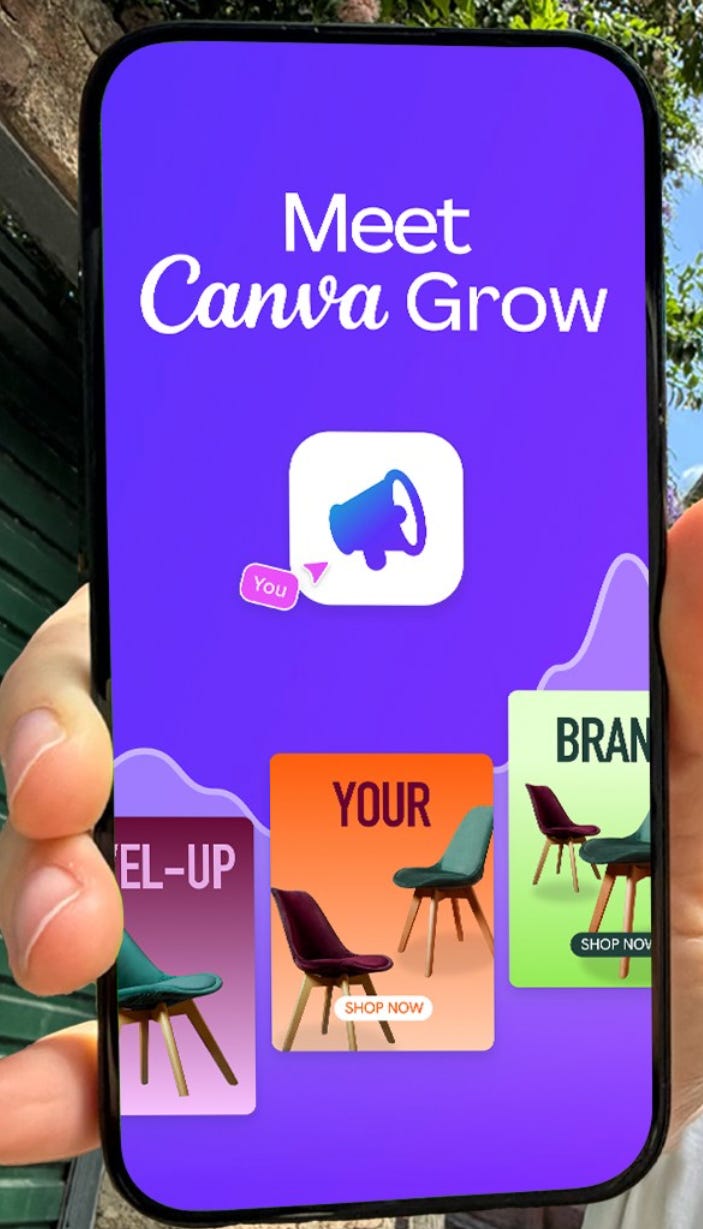
In 2012, Keval Desai met Canva founders Melanie Perkins and Cliff Obrecht in a small San Francisco coffee shop. Professional design largely belonged to people with desktop computers, keyboards, mice and expensive software. The iPhone had arrived a few years earlier, and Melanie believed people should be able to design using the device already in their pockets.
An investor could have counted the buyers of professional design software and stopped there. Keval focused on everyone who had something to communicate but lacked the tools to design it. Canva could change who participated and where the work happened. He invested through his previous fund, betting that the market for design was far larger than the market for design software.
During his years at Google, Keval remembers Larry Page responding to requests for people or capital with an unusual question: Is it a toothbrush? It took Keval years to understand the shorthand. Could the product earn a place in billions of daily routines?
The question now serves as Keval’s first investment screen at Shakti VC. He looks for founders who can take something people already do and make it accessible to many more. He calls it reimagining a toothbrush.
Size the Behavior, Not the Spend
Most investors size a market by calculating what customers spend and how much of that spending a company might capture. Keval counts the use. “We look at TAM in terms of use case TAM,” he says.
Current spending captures a market with its existing limitations intact. Keval asks how many people would perform the underlying activity, and how often, if those constraints disappeared. He compares it to studying an iceberg. The visible market sits above the waterline. The founder must reveal what lies beneath it.
When Keval met The RealReal founder Julie Wainwright in 2013, consignment was already an established habit. Growing up in India, he remembers people coming to his family’s home to collect used clothing in exchange for cash or other goods. Counting the people with Chanel or Gucci in their closets, however, captured only the supply side. A much larger group wanted to buy those brands secondhand. The RealReal made it easier for both groups to participate.

With Gatik, the overlooked variable was frequency. Retailers and consumer brands already relied on trucks to replenish store shelves. As on-demand ordering increased, those shelves needed to be restocked more often. A route once run weekly might need to run daily, even as companies struggled to find enough drivers. Autonomous technology offered a way to add capacity to a system under growing pressure.
Frequency also links two Shakti robotics investments that would otherwise appear unrelated. Glacier builds robots that sort waste at recycling facilities, where few people want to do the work by hand. Cosmoserve Space is developing robots to collect debris in space as more objects enter low Earth orbit. In recycling facilities and low Earth orbit alike, waste grows alongside the activity that creates it.
The portfolio companies occupy different markets and use different technologies, but Keval sees the same structure beneath them. Each begins with a recurring need and a constraint that keeps the current solution from scaling. Calling one a marketplace and another an artificial intelligence company tells him less than understanding the use case. Once the use case holds, he turns to the harder question of whether the founder can build the company around it.
The Founder Before the Proof
At inception, a founder may have little more than a product idea and an account of how the world could change. There may be no revenue, operating history or reliable data to test. Keval describes the investor’s job as identifying Michael Jordan in kindergarten.
He looks for three traits: a time traveler, a talent magnet and an execution machine. Time travelers speak about the future as though they have already visited it. They tend to use plain language because their understanding does not depend on jargon or the technical fashion of the moment.
Julie spoke about resale becoming part of a circular economy years before The RealReal became a public company. Gatik’s founder described autonomous trucks making logistics safer and more economical. Melanie saw design becoming accessible to nearly anyone while Canva was still an early idea.
A clear vision gains credibility when talented people commit to it. In the beginning, founders have little capital, brand recognition or institutional standing to offer. Keval pays attention when they still persuade exceptional people to join them. Those early employees have spent more time with the founder than most investors and accepted the risk.
The final signal appears between meetings. Some founders return a week later having recruited someone important, solved a technical problem, secured a customer or opened a new path. Their pace shows whether the vision can withstand the daily work required to build it.
Keval views these founders as Olympic-level athletes who still need the right coach. Experienced founders and CEOs invest in Shakti’s funds and mentor the entrepreneurs it backs. The arrangement reflects his belief that capital has become widely available while sustained, relevant guidance remains difficult to find.
It also explains his preference for a small portfolio. A strict founder filter loses its meaning if the fund must deploy money across a large number of companies.
You Can Scale Capital, Not Companies
Keval believes the venture industry has expanded the number of startups it funds without producing a comparable increase in enduring category leaders. Citing historical IPO data maintained by University of Florida professor Jay Ritter, he says the top of the startup funnel has grown by 10 to 20 times while the output has remained relatively stable at roughly 50 category-leading companies a year.
Consumers and businesses tend to settle around one or two leading providers in a category. More capital can support additional attempts, but it cannot guarantee more independent winners. As Keval puts it, “We can scale capital, but we cannot scale companies.”
Large venture platforms play a different and, in his view, rational role. They provide the growth capital that technology companies once raised primarily through public markets. Their rise has allowed startups to remain private longer and shifted part of the traditional public and mezzanine market into private funds.
Keval questions what the additional money and time have produced. He says technology companies now remain private for roughly 10 to 12 years and raise considerably more before an IPO. Over the same period, he says, the portion reaching the public market profitably has fallen from roughly 80 percent to 20 percent.
His concern centers on incentives. A company with continued access to private financing can delay proving its unit economics and establishing whether the model works from end to end. More capital gives the company time to solve those problems, but it can also reduce the urgency to confront them.
Shakti’s concentrated approach reflects that trade-off. The firm looks for a recurring use case, a founder capable of leading the company for years and a credible answer to one more question: Why now?
When the Cost Collapses
Keval learned how much timing can alter a market while building his own startup in 1999. The company raised $25 million. He recalls spending approximately $24 million on data center capacity from Exodus, servers from Sun Microsystems and an Oracle database before the team could publish a single web page.
Open-source software changed those economics. Once Linux and other accessible infrastructure became commercially viable, entrepreneurs could launch internet companies for a fraction of the earlier cost. The lower barrier allowed more founders to apply the technology to businesses and behaviors far beyond the internet’s first commercial wave.
Keval sees artificial intelligence approaching a similar stage as open models and falling token prices make the technology available to more companies. That will increase the number of products and lower the cost of testing them. He will be watching for founders who connect the cheaper technology to an activity capable of reaching far more people.
In April 2026, Keval attended Canva’s customer event and listened as Melanie described the company’s vision for design in the age of artificial intelligence. Fourteen years had passed since their first meeting, but he recognized the future she was describing. The first time, Melanie had laid it out across a coffee-shop table. Now she was presenting the future at SoFi Stadium.
More from Uncovered Media


