



A company selling into healthcare, government or insurance can spend months convincing a customer to buy and even longer getting the product into production. Security teams review it. Compliance teams question it. Operators test whether it can work with systems built years before the company existed.
Morgan Blumberg does not see that friction only as a cost. Once a startup has earned approval, integrated with legacy infrastructure and built trust inside the institution, the next company must repeat much of the same work. The difficult path into the market can become part of what protects the business once it is there.
That belief shapes where Morgan spends her time as an investor at M13. She is drawn to industries that have been slower to adopt technology, including healthcare, government, financial services, insurance and business administration. These markets do not offer the clean adoption curves investors often prefer, but they can create advantages that cannot be reproduced through better software alone.
As artificial intelligence makes products faster and cheaper to build, Morgan is paying closer attention to the parts of a company that remain difficult to generate on demand.
The Hill Is Part of the Moat
Regulated buyers rarely adopt new technology through a single decision. Security teams inspect it. Compliance groups examine it. Procurement negotiates it. Operators determine whether it will work with systems that may be decades old, while executives weigh the consequences if the deployment fails.
A startup can spend months selling and longer implementing. It may need to educate the customer before the customer can evaluate the product. In healthcare and government, buyers may understand that AI matters without knowing where it belongs inside their organizations.
The same obstacles confront the next company trying to sell into that market.Once a product has passed review, connected to existing systems and become part of an institution’s operations, replacing it creates another expensive project. A competitor must rebuild the access and confidence that allowed the first company to deploy.
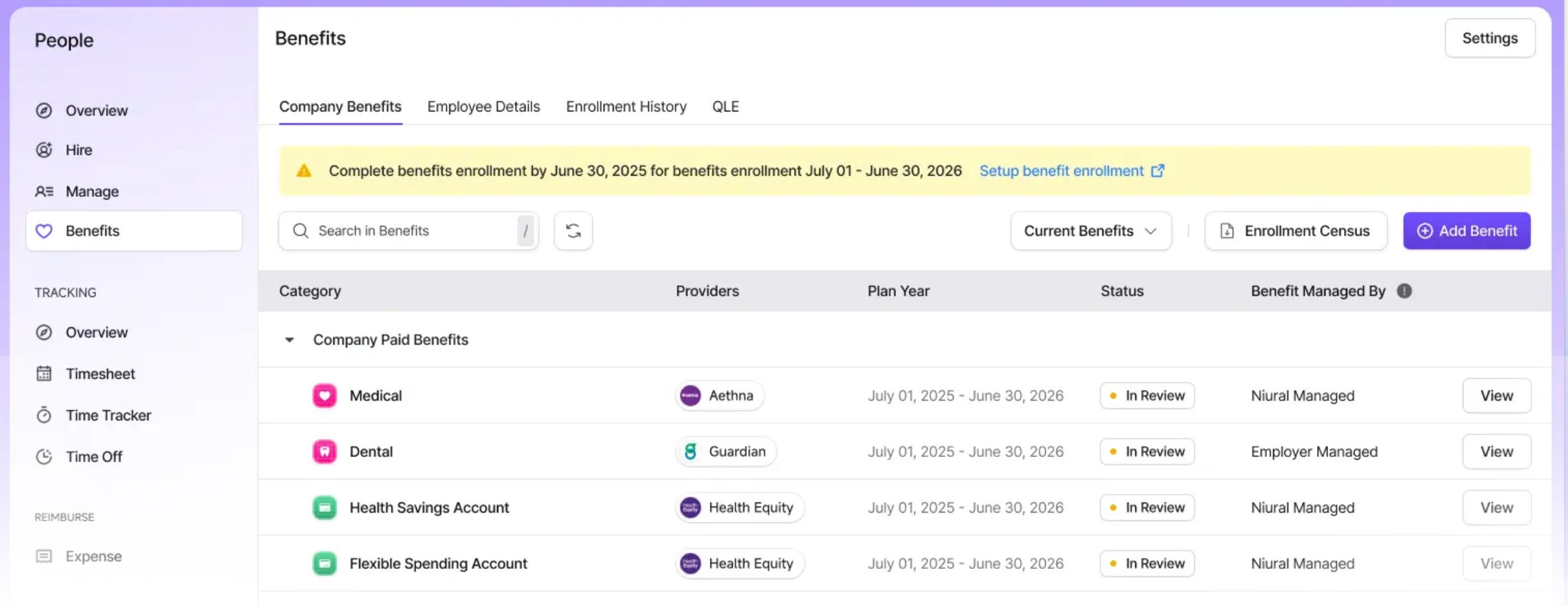
Morgan sees this in Niural, an AI-first global hiring, payroll and compliance platform in her portfolio. PEOs combine payroll, benefits and human resources administration, functions every business needs but many owners do not understand in depth. Niural’s work includes relationships with large insurance carriers that Morgan says can take years to establish. A new startup may build an attractive interface quickly. It cannot manufacture those carrier relationships at the same speed.
That makes her cautious about AI products whose primary advantage comes from improving an accessible workflow. As models become more capable, large labs may incorporate many of those features. Morgan spends more time on businesses that require regulatory approval, specialized knowledge, scientific depth, proprietary infrastructure or long-standing customer relationships.
The model can power the product without accounting for the whole company.
Being Early Requires More Than Waiting
Those barriers offer little protection if customer demand never arrives. Some industries adopt slowly because the technology is immature. Others lack a strong reason to change. A company can understand its market deeply and still exhaust its capital before buyers are ready.
Morgan considers timing part of the investment, particularly in industries with a history of slow adoption. She looks for companies that can stay close to customers while the market develops, gathering information and building the infrastructure they will need once interest turns into purchasing.
Prepared 911 entered government before agencies were broadly buying AI services. The company was already working near its eventual customers through other products, giving its team a direct view into their operations and emerging needs. When AI adoption accelerated, the company adjusted its product around a buyer it already understood. Morgan says it reached an acquisition in roughly five years, a faster outcome than many investors might expect from a company selling into government.
Its early position mattered because the company used that time to learn. It stayed close enough to see how the buyer was changing and had enough credibility to respond when the opening appeared.
Morgan now sees a similar change in healthcare. Providers and health systems increasingly believe they need an AI strategy, even when they remain unsure how to build one. Through her work with healthcare companies, she has seen buyer demand rise and some sales cycles begin to shorten. Deployments remain difficult, but the conversation has shifted from whether these institutions should use AI toward where they should begin.
A company that arrives after that change may find a more receptive customer. It will also compete with startups that spent the earlier years learning how the institution purchases, where integrations break and which requirements cannot be avoided. Being early only helps when the company learns faster than the market moves.
Prescriptive About People
That kind of waiting places unusual demands on a founder. The product may change before the customer becomes ready. A regulatory requirement can alter the deployment. A promising sale can stall because one stakeholder refuses to approve it. The founder has to stay committed to the problem without treating every early assumption as permanent.
Morgan avoids defining her investment strategy through a narrow list of categories because she believes a rigid thesis can hide an unexpected approach. She becomes more selective when judging the person pursuing it. At the seed and Series A stages, she looks for founders who can remain absorbed in a problem through slow sales, product changes and periods when the market provides little validation.
For some repeat founders, that commitment comes from unfinished ambition. Morgan describes Sam Pasupalak, the founder of Skyfall AI, who had a lucrative acquisition for his AI lab around the period Google acquired DeepMind. Pasupalak considered the outcome a failure because he believed his company had been working toward something closer to what OpenAI and Anthropic later became.
He returned to build Skyfall, which just emerged from stealth, driven by the distance between the company he sold and the one he believed he could have created. While OpenAI, Anthropic and Google are racing to build the autonomous employee, automating individual jobs piece by piece until humans oversee the work rather than perform it, Skyfall is betting that goal is too narrow. Rather than validate its technology through controlled customer pilots, the company plans to acquire a small B2B SaaS or e-commerce business.
First-time founders may carry a more direct connection to the problem. Mike Chime, the founder of Prepared 911, remained focused on public safety as the company moved from school safety into emergency response and 911 call centers. The product changed, but the problem continued to organize the company. Morgan believes that consistency helped it retain employees through pivots because the team had joined a mission broader than one product.
She pairs that intensity with humility. Founders need to acknowledge gaps, seek expertise and respond when the market contradicts their plan. In a regulated industry, stubbornness can sustain a company through a long sales cycle, but it can also trap the team inside an approach the customer will never accept.
Market credibility matters alongside temperament. John Nay had previously built a business selling into regulated industries before founding Norm Ai, which works on compliance and legal automation for financial services. That history gave him credibility with the institutions he wanted to reach. His advantage matched the demands of the market rather than resting on ambition alone.
Morgan wants a founder with enough conviction to remain inside a difficult problem and enough flexibility to change how it gets solved.
Conviction Without a Fixed Landing
Morgan learned early that thinking too precisely about an uncertain outcome can create its own limits. She grew up in North Carolina and spent much of her childhood in physically demanding competitive sports, including gymnastics. In acrobatics, concentrating on every possible failure can interrupt a movement the body already knows how to complete. Fear becomes part of the mechanics.
The sports required her to attempt difficult movements before she could control every variable. They also taught her that confidence did not prevent injury. Morgan broke several bones, including her back, and returned to competition. The experience left her comfortable with effort that offers no guarantee of a clean result.
Her early career widened that instinct beyond sports. At Morgan Stanley, she worked with founder-run companies in payroll, benefits, IT services and back-office administration. Many had not followed the familiar venture-backed path. They had built substantial businesses in categories that attracted less attention from technology investors, sometimes reaching an acquisition or public offering without significant venture or private equity funding.
Those founders showed her that exceptional businesses do not all begin in the same ecosystem or develop through the same financing model. They also brought her close to industries whose essential role was easy to overlook because the work appeared ordinary from the outside.
Morgan still resists defining the future too narrowly. She has clear areas of interest, but she does not want a thesis to become a set of instructions that filters out an unexpected company or founder. In the markets she favors, the original product may change well before the customer is ready to buy.
The founder she wants to back must be willing to spend years earning entry into a difficult market while watching closely enough to recognize when the original route no longer works. The landing may move. Staying close to the problem is what makes the adjustment possible.
More from Uncovered Media


