

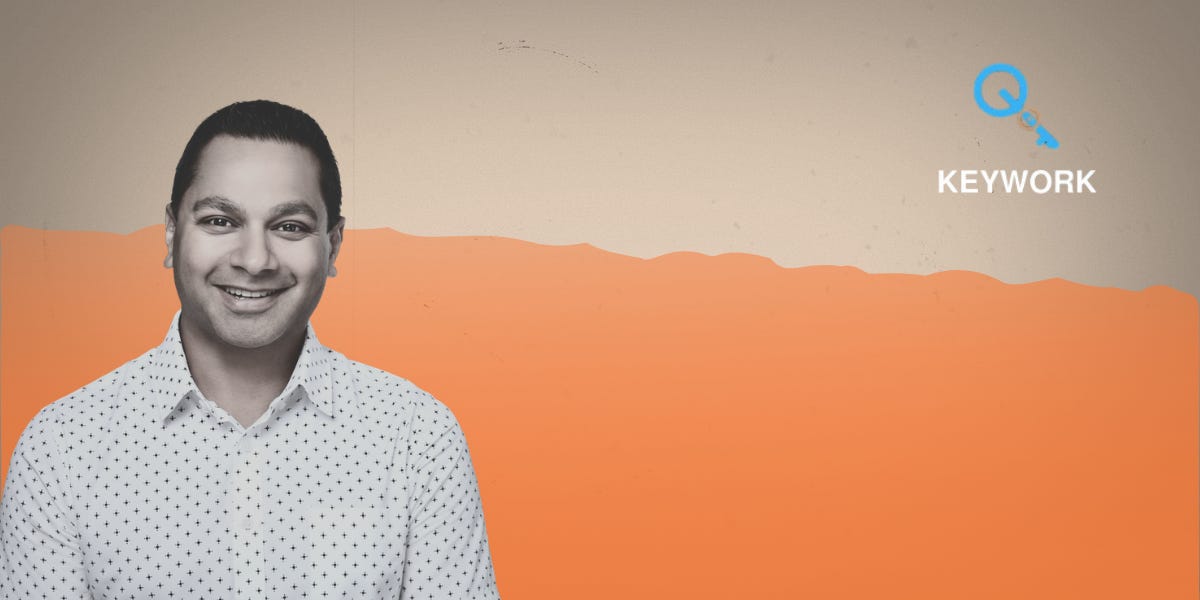

While most of Silicon Valley is concentrating its money and attention on the companies artificial intelligence will create. Nitin Pachisia is looking toward the businesses it cannot physically perform.
A model cannot climb onto a roof, repair a transmission or care for a child. Those jobs still require people working in a particular place, often within a limited radius. The businesses built around them tend to grow steadily rather than exponentially, which has long put them outside the boundaries of venture capital. Their resistance to automation may now work in their favor.
“These local physical service businesses are more AI-proof than a lot of software businesses,” Nitin says.
His new firm, Keywork, plans to invest in what he calls the real economy: roofing companies, auto-repair shops, med spas, daycares, landscaping companies, waste-management businesses and other local operations. Keywork will pair early capital with an AI operating system designed to reduce the administrative work that consumes an owner’s day.
The approach follows a pattern in Nitin’s career. In 2012, he and two friends were building a software company while working full-time. They agreed to quit their jobs once the company had three paying customers. His co-founders only had to decide whether they were ready to take the risk. Nitin, who was in the United States on an H-1B visa, first had to find a legal way to leave his job.
After a couple dozen attorneys advised him to remain employed until he received a green card, he kept looking for another path. The solution he found became the basis for Unshackled Ventures, which combined a venture fund with the infrastructure immigrant founders needed to work legally on their companies. Unshackled has since supported 109 companies led by founders from 36 countries of birth, with a 100% success rate on visa filings, according to Nitin.
Keywork addresses a different barrier, but the method is simulate. Rather than wait for an established system to accommodate excluded entrepreneurs, Nitin builds infrastructure around them.
The gap below private equity
Traditional venture capital is designed for companies that can expand rapidly and capture a large share of a market. Software fits that model because the same product can serve more customers without establishing a physical presence in every city.
A roofing company grows by adding workers and routes, expanding its service radius and eventually entering another metropolitan area. It’s unlikely to grow tenfold in a year or dominate roofing across the country. The work itself keeps the industry fragmented.
Nitin argues that growth still matters in the real economy, but its cost matters more. A well-run roofing or service company might grow between 40% and 80% annually while maintaining strong margins. Dismissing the category because many small businesses fail, he says, is like dismissing venture because most startups fail. The operator and the resources available shape the outcome.
The funding gap appears early. Private equity firms, search funds and AI roll-ups buy HVAC companies, veterinary practices and other local businesses once they reach sufficient scale. Nitin says even the smallest buyers generally look for businesses with at least $5 million in revenue and $2 million in EBITDA. Founders still need capital to reach that point, and many begin with too little of it.
Keywork intends to enter at one of two moments. It might back a nurse who has tested a concept by renting space inside an existing med spa and is ready to open independently. It might invest in the owner of a successful auto shop who wants to add a second location. The firm will also consider an incoming operator buying an existing company, since new ownership can create an opening to change how the business runs.
What Keywork doesn’t want to do is persuade a longtime owner to overhaul a company they have operated the same way for 15 years. Nitin sees too much behavioral inertia there. He would rather introduce new systems while the business is still taking shape.
Software is not the same as adoption
Small-business owners can buy separate tools for accounting, scheduling, customer management, payroll and route planning. Each one creates another system to choose, configure and manage. The owner often ends up carrying information from one application to the next.
“Small businesses are not great buyers of software,” Nitin says. “There’s a lack of bandwidth, a lack of knowledge. They are also not vibe coders. These entrepreneurs aren’t going to vibe-code their own workflows and solutions.”
Keywork OS is meant to sit above the models, infrastructure and applications a company needs. It will identify tools, connect them and give the owner one place to work across the business. Keywork plans to concentrate on the integration and orchestration layer rather than build every underlying application itself.
The configuration for a med spa will differ from that of a waste-management company, but Nitin says the mechanics repeat. A roofer, an HVAC contractor and a pool-maintenance company are all field-service businesses. Each hires and trains workers, manages routes, schedules projects and serves customers within a physical radius. Keywork has grouped the industries it studies into roughly a dozen archetypes based on their business flows rather than their labels.
Over time, Nitin expects the firm to build a library of applications, models and agentic workflows that can be adapted to each operator. Owners would not need to become AI experts to use them.
A contract built for profitable growth
Traditional venture financing presents a second mismatch. A venture fund usually realizes its return when a company raises another round, sells or goes public. That structure works poorly for a profitable local business whose owner may want to operate it for decades.
Keywork has institutionalized a structure it calls an equity and profit interest contract, or EPIC. The contract gives the firm an equity stake and the right to participate proportionally when an owner distributes profits. If the company is sold, Keywork shares in the proceeds. If it later raises preferred financing from a venture or growth investor, the contract converts much like a SAFE.
The structure allows the fund to receive cash while continuing to hold its investment. It also leaves the reinvestment decision with the founder.
“The profit share becomes a release valve on the pressure to grow at all costs and exit,” Nitin says.
One founder might keep expanding for 30 years. Another might build a few locations and sell after seven. Keywork can participate in either path without requiring the company to keep raising money or manufacture a winner-take-all story.
Keywork plans to take minority positions while founders retain control and continue operating their companies. Private equity may eventually acquire some of those businesses, but it would arrive after the founder has reached the scale those buyers require.
From technology to the trades
Keywork also needs operators who can use automation without losing sight of the physical work and customer relationships at the center of the company.
Nitin says he is already meeting people from the startup world who want to move into real-economy businesses. They bring experience in hiring, systems and growth, but do not need to import every expectation of venture-backed technology. A company that compounds 60% annual growth with 35% EBITDA, he says, can be an exceptional business without growing fivefold each year.
He expects more knowledge workers to consider that path as AI changes their fields. Some may move toward industries where demand already exceeds supply. Nitin points to labor gaps in roofing, plumbing, electrical and mechanical services across many metropolitan areas. An experienced technology operator might decide the better opportunity is not another application for those industries, but a company operating within one of them.
Nitin does not confuse small-business ownership with a more relaxed life. His father, who ran businesses in India, began bringing him to work when he was 12. He later pushed Nitin to get a job rather than remain in the family business. “I don’t get a day off, ever,” his father told him.
Owners often become what Nitin calls the “context glue” of a small business. They remember what a customer requested, tell an employee what changed, update the schedule and make sure the work is reflected elsewhere. Much of the day goes toward transferring information and making routine decisions because no one else has the full picture.
Keywork wants its software to take on more of that work. Nitin cares about margin improvement, but it is not the first measure he plans to watch.
“Unlike AI roll-ups, where they talk about margin lift, we think the primary metric is the number of hours saved for the owner or the decision-makers,” he says.
Some of those hours may go back into the company through better customer relationships, planning and growth. Others may go toward the owner’s health or family. The test for Keywork will be whether its capital and software can help a business grow without requiring its owner to remain the person carrying every piece of it.
More from Uncovered Media


