


The founder did not have the résumé most venture firms are trained to reward. He had dropped out of college, never worked at a marquee technology company and lacked the obvious credentials that tend to move a pitch to the top of an investor’s inbox.
That founder, Joseph Kitonga, founder and CEO of Vitable Health, had something Vaughn E. Crowe considered more useful. He had spent years inside his parents’ home health care business, helping the operation run and seeing its problems up close. He understood the workflows, the daily friction and the places where the system broke because those problems had shaped his own life.
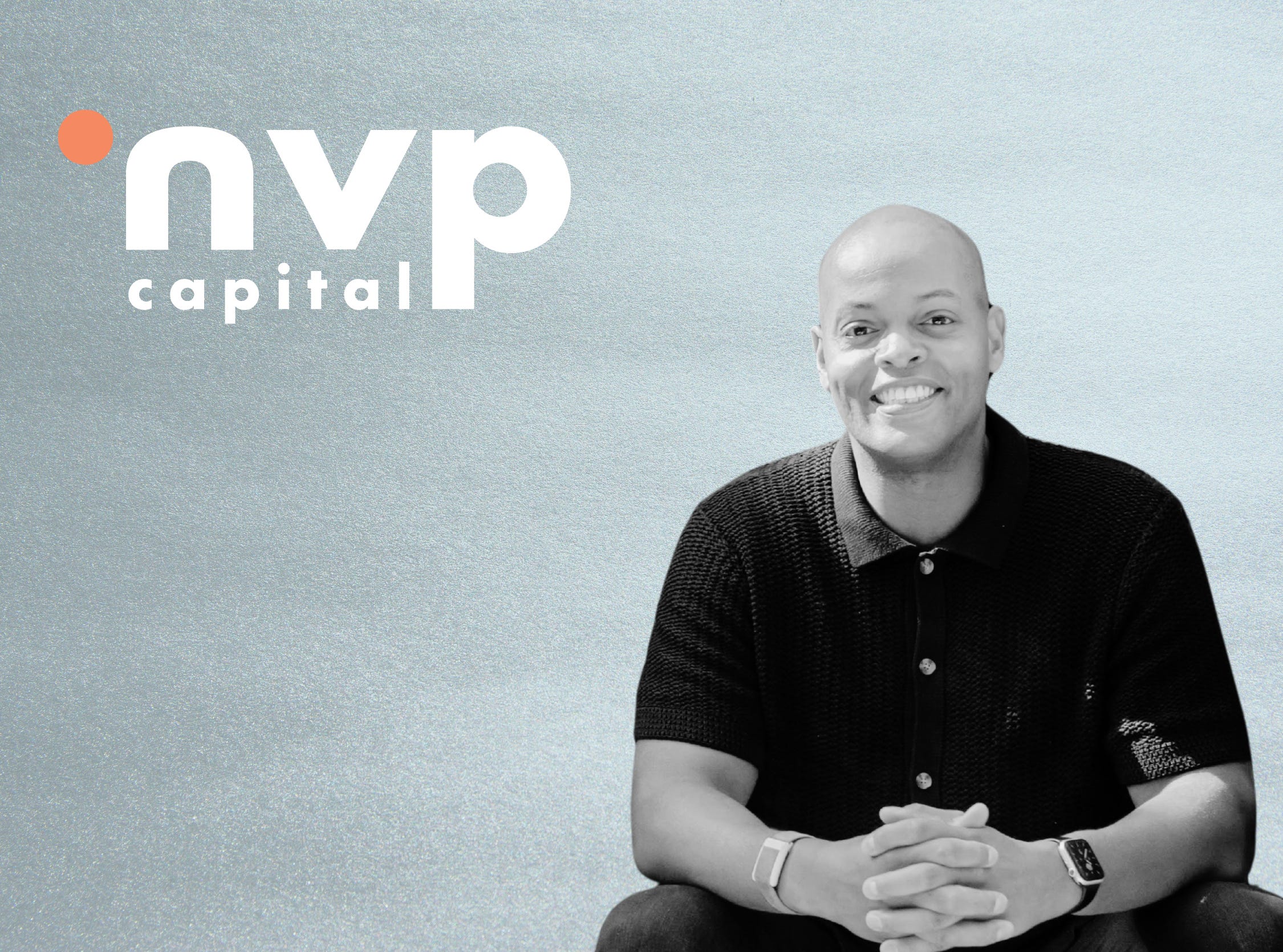
Kitonga reflects one of the core ideas behind nvp capital. The New York-based firm invests at the pre-seed and seed stages in business-to-business software companies serving industries that have historically been slow to modernize. nvp studies markets closely, but Vaughn has become increasingly skeptical that a strong thesis alone can lead an investor to the best company. In complex industries, the founder often understands the opportunity before the market does.
What the résumé misses
When Vaughn and his partner, Dan Borok, launched nvp capital in 2020, they entered venture during a period defined by COVID-19, civil unrest and economic uncertainty. Vaughn was also grieving the death of his father while helping build a new investment firm. Even then, the strategy was focused: back founders using software to modernize large, under-digitized industries such as health care, financial services, logistics, supply chain and industrial operations.

The strategy remained consistent as the firm moved from its first fund into its second, but the investment process evolved. Vaughn and the team began spending more time understanding how a founder had arrived at the problem and less time assuming their own market research could explain where the company should go.
Inside nvp, the team uses the phrase “earned secret,” language Vaughn credits to his colleague Skylar Dorosin. It describes a point of view built through direct exposure rather than detached analysis. A founder might develop it while working inside a venture-backed company, serving in the military, helping run a family business or repeatedly confronting an inefficient system. The specific path matters less than whether the founder’s history clearly connects to the company being built.
Prestige still provides information, but Vaughn does not treat it as proof. Elite universities and recognizable employers can signal talent, yet they do not own it. He is more interested in what a person has done, what they have tried and whether the company feels like a continuation of experiences that came before it.
That is why Kitonga stood out. Someone else might have identified the same market and built a credible product, but Kitonga had absorbed the problem before deciding it was a business opportunity. Vaughn saw that experience as a form of preparation no credential could reproduce. That preparation is demonstrated in business outcomes. Vitable Health has raised a $16 million Series A, now serves 200,000 people and is expanding its direct primary care plan nationwide.

Research sets the boundaries
nvp is still a thesis-driven firm. It deliberately avoids consumer products, biotechnology and broad horizontal software, concentrating instead on vertical business-to-business companies operating in complex and often regulated industries.
The firm develops those views through what it calls the nvp Galaxy, a network of corporate executives, private equity leaders, operators, advisers and industry experts. These relationships help the team understand where businesses face meaningful friction, which problems are essential and which are merely inconvenient. They give nvp a clearer view of where software can change an industry’s economics.
The research creates boundaries around the search, but it does not produce the investment by itself. Some opportunities become convincing only when a founder reveals an aspect of the market that outsiders could not see.
David Roger did that with Hetal Retail.
Roger had previously built Felix Gray, where he encountered a persistent information gap between retailers and consumer packaged goods brands. Retailers had detailed visibility into what was happening on store shelves, while brands often lacked timely information about pricing, inventory, shelf placement and competitive activity. By the time the data arrived, the moment to act had often passed.
Hetal uses computer vision and artificial intelligence, along with information collected by people scanning shelves, to give brands a more immediate view of store-level conditions. The technology helps companies respond faster to stockouts, pricing changes and merchandising issues, but the investment began with Roger’s understanding of the imbalance itself. He had seen what brands could not see and knew why that missing information mattered.

Vaughn had some exposure to the consumer packaged goods industry through his own network, and members of the nvp Galaxy helped validate the need. Still, he is candid that the firm may not have pursued the retail opportunity with the same conviction without Roger. The founder did more than fit the thesis. He sharpened it.
Where software meets the physical world
Vulcan Elements offered a different version of the same pattern.
Founder John Maslin had served in the Navy before starting the company at Harvard Business School. He saw a vulnerability in the supply chain for rare earth magnets, which play a role in defense, batteries, wind energy and advanced manufacturing. Rather than treating the opportunity as a conventional software problem, he set out to build domestic manufacturing capacity supported by new technology.
The company sat outside the most familiar shape of a seed-stage software investment. It involved physical infrastructure, government relationships, manufacturing and a longer execution path. nvp was the first check into the seed round, alongside Ibex Ventures, even though the deal prompted internal questions about whether it fit the firm’s original boundaries.
The team ultimately backed Maslin and his two co-founders because their mission and experience made the complexity easier to underwrite. Vaughn saw a founder with a specific reason to pursue the problem and the persistence to build through layers of technical, financial and regulatory difficulty.
Vulcan also helped nvp refine how it thinks about artificial intelligence. Some portfolio companies are AI-native software businesses. Others use artificial intelligence to improve how physical products are designed, manufactured or delivered. That second category has made areas such as defense, energy, industrial operations, logistics and robotics more relevant to venture capital without turning them into ordinary software markets.
The opportunity comes from the intersection. Old industries gain new technical capabilities, but they still require founders who understand the physical systems, customers and constraints involved.
A nonlinear path into venture
Vaughn’s interest in unconventional founder histories is closely tied to his own.
As a teenager, he expected football to shape his future. He became one of the stronger high school players in his home state before a serious knee injury changed the trajectory of his recruitment. He went to Colgate University and played for several years, but another medical condition ended his time on the field. With the original plan gone, he worked in the university mailroom, led intramural sports and studied abroad.
After graduation, Vaughn joined Chubb Insurance as an underwriter and marketing manager. Five years later, he began what became a 15-year career working with investor Ray Chambers. Inside the family office, Vaughn gained exposure to direct investments, venture funds, operating businesses, philanthropy and institutional capital. He helped run one of the family’s businesses, worked on the foundation and served on the New Jersey pension fund board.
That range of experience gave him a broader view of company building than a direct path through venture might have. He saw capital from the perspective of an allocator, an operator and an investor, while also learning from mentors who had built institutions over long periods of time.
Vaughn’s entrepreneurial story began earlier. At 8, he went door to door during the winter offering to shovel snow for neighbors including Miss Baker, Mr. Melvin and Mrs. Clemens. He wanted enough money to buy candy and play video games at the arcade without asking his parents. The scale was small, but the instinct was recognizable: notice an opportunity, do the work and create some independence.
Those experiences shape how he reads a founder’s story today. A setback, a detour or an unconventional job can be more informative than a polished trajectory if it explains how the person learned to solve problems and why they chose this one.
His life outside work also affects how he thinks about partnership. Vaughn describes venture as consuming and says the expectations inside nvp can approach round-the-clock intensity. Yet when his mother, Doris, calls, he answers, even if he is in the middle of a pitch to a limited partner. That choice is personal, but it also reflects his understanding that founders build companies while dealing with illness, family obligations, divorce, grief and other parts of life that do not disappear during a financing round.
Knowing when to step aside
nvp capital is now investing from its second fund while raising its third. The firm has also opened an office in San Francisco, adding to its headquarters in New York. Vaughn sees both cities as important talent and capital centers, though he is quick to note that strong portfolio companies have also emerged from Colorado, North Carolina and Tennessee.
The geographic expansion supports a larger ambition to build an enduring firm rather than a sequence of funds. For Vaughn, that means maintaining a clear investment strategy, moving quickly and surrounding founders with a network that can help when needed.
It also means understanding the limits of the investor’s role. Some founders need customer introductions or help thinking through a difficult decision. Others need the investor to remain available without stepping into the operating seat. Vaughn’s background in sports informs that instinct. A coach or investor must be able to recognize talent, prepare the conditions for success and then allow the person closest to the action to perform.
That is the harder part of founder-driven investing. nvp can research a sector, consult its network and develop a detailed view of where change is likely to happen. The firm still has to remain open to a founder who sees the problem differently and can explain why the existing thesis is incomplete.
Vaughn’s most revealing question to a founder is also a useful test of his own judgment: What do you see that I don’t?
The best answer does not invalidate the investor’s work. It shows that the founder has gone further.
More from Uncovered Media


