


Connect with Veni
https://www.linkedin.com/in/venidhir/
VC Uncovered’s View
Veni Dhir is the type of investor we launched VC Uncovered to spotlight. She’s an entrepreneur building a fund inside a global enterprise, and her unique path which spans distressed private equity, industrial technology, and corporate strategy gives her a view of company failure that most early-stage investors simply do not have. This is precisely the kind of fresh, unconventional perspective needed to challenge the “move fast and break things” consensus.

Working within ADP Ventures, Dhir focuses on companies reimagining how the world works. She is not chasing the flashy, horizontal AI platform; she is looking for the “unglamorous” problems in areas like cross-border payroll, tax compliance, and benefits administration. This focus on “boring infrastructure” is a bold, counter-narrative approach.

While many VCs are content to value the potential upside, Dhir’s experience managing turnarounds and restructurings has instilled an almost obsessive focus on what she calls “foundation risk.” She saw firsthand that companies rarely fail due to the wrong market; they fail because they are built on unsustainable economics, a failure she believes is often visible at the seed stage.

This level of financial rigor and owner mindset (caring about compliance, governance, and unit economics from day one) is what separates institutional business builders from “make-do” startups. Dhir embodies the nimble, forward-thinking investor we champion, one who applies the discipline of a scaled enterprise to the agility of a venture-backed startup. She is stress-testing the foundations of a company to ensure it can actually scale with purpose and durability.
Meet Veni
Q: You can be anywhere. Eating, drinking, and reading your favorite thing. What is it?
A: I would be on my parents’ patio in Singapore, sipping chai with tea biscuits and reading The Startup Wife. It’s a great underdog story about building something meaningful and the brilliant people whose contributions aren’t always recognized.
Key Quotes
“The most valuable companies solve unglamorous problems no one brags about fixing, and build institutional foundations from day one.”
“I learned to invest by first learning how companies actually break.”
“Companies rarely fail because they picked the wrong market. They fail because they built on unsustainable economics, assuming they’d fix it later at scale.”
“The metric I care most about: do founders call me when struggling with a decision, or only when they have good news?”
“With unlimited information available, the real skill isn’t accessing data. It’s having intellectual independence to synthesize it into your own conclusions and courage to act on convictions even when contrarian.”
Original Responses (Lightly Edited for Clarity and Flow)
Quick Background
I was born in India, lived in Indonesia, grew up in Singapore, and moved to the US for college at UVA’s McIntire School of Commerce, later earning my MBA from Stanford GSB. Growing up across multiple countries made me question “obvious” assumptions early. You learn quickly that norms are often just local defaults.
I began my career in private equity manager selection, then moved into investment banking and special-situations private equity focused on industrials. Industrial technology, oil and gas services, aerospace and defense, and broader real-economy sectors operate under real constraints: supply chains, labor, regulatory risk, safety, and capital intensity. That grounding shaped my instinct for durability.
After years in industrials-focused PE, I shifted into SPAC and growth investing, followed by finance, strategy, and corporate development at Nextdoor, which pulled me closer to operating cadence and product strategy.
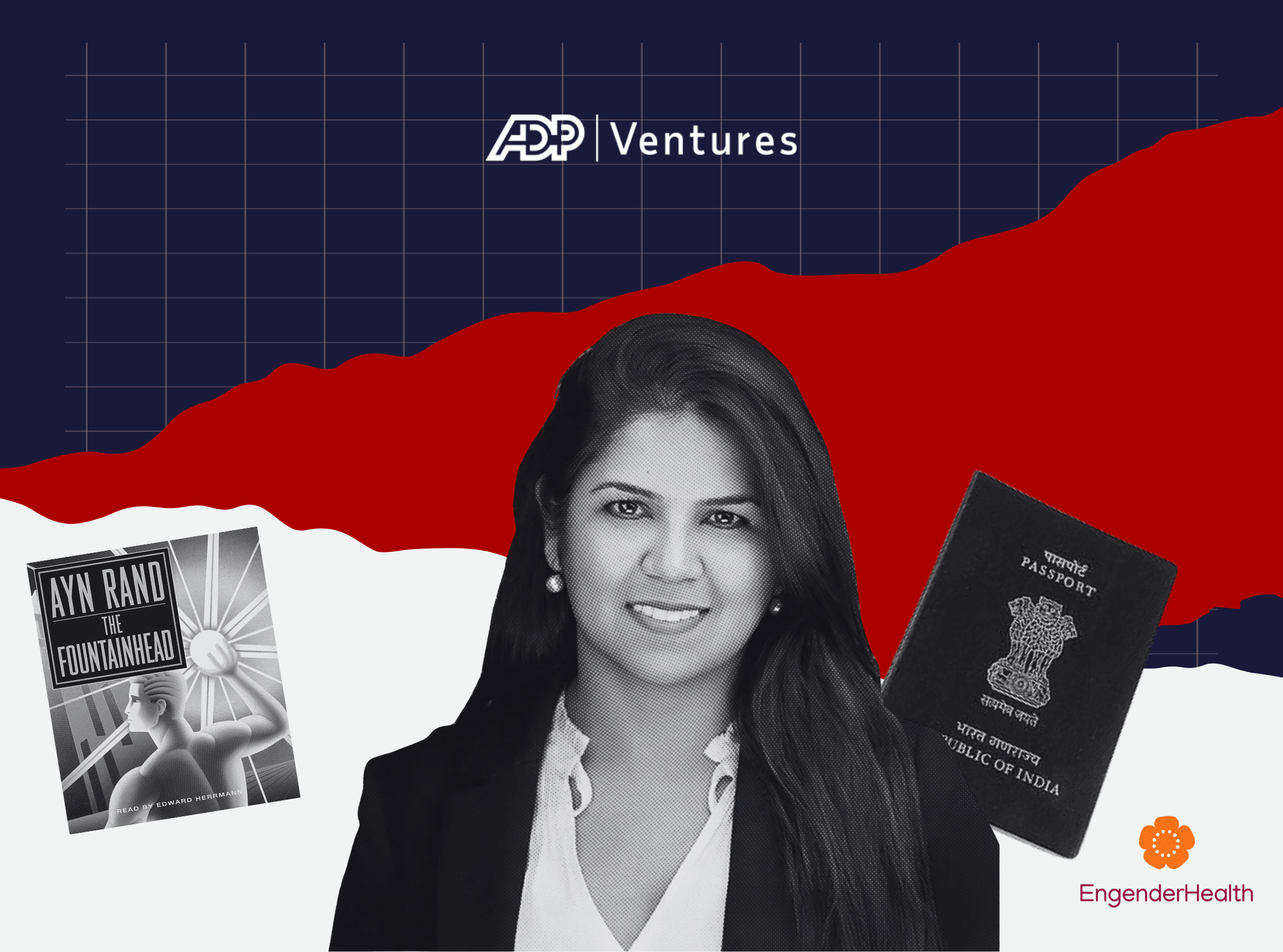
Today, I am one of the founding members of the ADP Ventures investment team, effectively building a fund inside a scaled enterprise. This is an entrepreneurial effort requiring both risk-taking and disciplined alignment with a company that millions depend on. I also serve on the board and audit committee of EngenderHealth, which keeps me grounded in governance and human impact.
Across distressed PE, industrial sectors, operating roles, and venture, one thing stayed constant: an owner mindset and a preference for independent, firsthand analysis over inherited narratives.
Background and Personal Journey
Formative Experiences
I learned to invest by first learning how companies actually break. The experiences that shaped me most were managing distressed situations in private equity. Early at Palladium, I found myself running a bankruptcy restructuring, making weekly cash calls to ensure we had enough to make payroll. You learn quickly that sophisticated models mean nothing if you run out of cash next month.
That embedded a permanent focus on unit economics and cash flow. Later, running turnarounds through covenant pressures, I saw the pattern: companies rarely fail because they picked the wrong market. They fail because they built on unsustainable economics, assuming they would fix it later at scale.
What is unusual is the breadth of my path. Fund evaluation, investment banking, buyouts, SPACs, corporate development, venture, growth, and angel investing, each taught me something different about how capital works across the lifecycle. That range gives me pattern recognition most early-stage investors do not get.
Now when I evaluate investments, I ask different questions. What breaks first if assumptions are off? Can this founder make payroll for eighteen months if nothing new closes? The best founders have already mapped their failure modes and are actively de-risking them.
The “Aha!” Moment
Silicon Valley showed me I wanted a front-row seat to the future. My “aha” moment came during Stanford and working in Silicon Valley. I had spent years in banking and PE analyzing what had already been built, valuing the past. But being immersed in the Bay Area, I realized I was energized by the opposite: seeing what is being created before it is obvious.
There is something uniquely compelling about being around founders working on big disruptions at the earliest stages. These are what I think of as first-handers: people creating from their own independent vision rather than following consensus or imitating what is already validated. At fourteen, I read The Fountainhead and learned this concept from Ayn Rand. It shaped how I see innovation and entrepreneurship.
Corporate venture sits at this perfect intersection. You get access to frontier innovation early, but evaluate it with the strategic lens and financial rigor of a scaled enterprise. You see the future being built and help shape how it deploys at scale. That combination of getting a sneak peek into transformative changes while applying disciplined capital allocation drew me here.
Shaping Your Worldview
Growing up across four countries taught me adaptability and pattern recognition across cultures are superpowers. I was born in India, lived in Indonesia, grew up in Singapore, and moved to the US for undergrad. Navigating different cultural and business contexts my entire life shaped everything. You learn the “obvious” solution is usually just local convention, not universal truth. You become less dogmatic, more curious about why things work differently in different places.
That global lens is invaluable in investing. I can relate to founders from diverse backgrounds and have pattern recognition across regulatory regimes, business cultures, and go-to-market approaches. When you have seen how payroll and employment practices differ across Asia, Europe, and the Americas, you develop respect for complexity many US-focused investors miss.
I grew up surrounded by strong women who were all first-handers. My mother completed her master’s degree before having children, and among my father’s sisters were two doctors, a professional basketball player, and a health scientist. Everyone led lives untainted by traditional society’s expectations. That shaped my worldview around independent thinking.
The other formative influence was working through distressed PE situations, where you develop owner mindset. You cannot just analyze from outside.
Philosophy and Insights
An Unconventional Belief
Boring infrastructure (governance, compliance, unit economics) separates institutional businesses from “make-do” startups. My contrarian view: the most valuable companies solve unglamorous problems no one brags about fixing, and build institutional foundations from day one, not after Series C.
Everyone chases horizontal AI platforms. I look for founders tackling high-friction workflows in regulated industries. Cross-border payroll, tax compliance, benefits administration, these are not sexy, but they present enormous trapped value where domain expertise matters more than technical novelty. These founders are first-handers, building from direct experience of a problem, not because it is trending in venture circles.
More importantly, I care about founders who establish proper governance, systems, and processes early. Conventional wisdom says “back-office boring stuff” can wait. I think that is wrong. If you are building something institutional, not just fundable, you need the right foundation from the start. That means caring about unit economics at seed stage, setting up board governance and financial controls before required, investing in compliance infrastructure when everyone says you are too early.
This comes from managing turnarounds where I saw companies treating early-stage as “make-do” mode inevitably struggle scaling.
Balancing Intuition and Data
Data shows what happened. Frameworks show what it means. Pattern recognition shows what breaks. I start with quantitative rigor, trained across banking, PE, and corporate development. I want cohort retention, unit economics, customer concentration, implementation timelines. I have modeled hundreds of companies spanning distressed restructurings to early-stage venture, so I know what healthy growth looks like versus unsustainable spend.
But data only goes so far. Spreadsheets cannot tell you if a founder has judgment to navigate inevitable pivots or if their problem understanding is deep enough to sustain them through years building in regulated spaces.
That is where pattern recognition comes in, accumulated experience seeing deals succeed and fail. When talking to founders, I listen for signals only obvious after being on the operating side. Do they get defensive when I push on churn, or walk me through what they are testing? Can they explain their wedge without jargon? Have they thought through unit economics with owner mindset?
I also look for first-hander thinking. Are they building from independent analysis and direct observation, or copying what is hot? Framework: data validates what is working today, mental models stress-test whether it works tomorrow, pattern recognition catches failure modes.
Best Advice
In the real world, you have unlimited resources but cannot afford to fail. The lesson that shaped me most came from observing the difference between academic and operational environments as someone who moved from Indonesia and Singapore to the US for university, then into high-stakes finance.
In school, you have constrained information during exams but limited consequences. You lose points, maybe fail a class. In the real world, especially now, you have unlimited access to information and resources, but room for error is incredibly low. One wrong liquidity decision means hundreds lose jobs. One poorly structured partnership constrains your business for years.
This relates to what Ayn Rand called “first-hander” thinking: forming judgments from direct observation and independent analysis rather than following consensus or herd mentality. My father gave me The Fountainhead at fourteen, and that concept shaped my entire life. With unlimited information available, the real skill is not accessing data. It is having intellectual independence to synthesize it into your own conclusions and courage to act on convictions even when contrarian.
That is why I obsess over unit economics and building institutional foundations early. Founders who think independently and build sustainable businesses win.
Your Philosophy in a Sentence
I back founders building institutional businesses in complex regulated markets, with owner mindset focused on sustainable unit economics from day one. I am drawn to founders solving structurally complex problems (regulatory requirements, cross-border operations, entrenched legacy systems) who are thinking about building something institutional, not just raising the next round. These are problems where you cannot just build a better interface. You need real domain expertise and discipline to establish the right economic foundation early.
This comes from working across the entire investing lifecycle. Fund evaluation, banking, buyouts, turnarounds, SPACs, corporate development, venture, growth, and angel investing. That breadth gives me a longer time horizon than most early-stage investors.
What I learned from late-stage PE and distressed work: most failures are visible early if you are looking at unit economics. My contrarian view is you need to understand and care about unit economics from day one, even at seed. Not expecting early profitability, but seeing founders have thought through what needs to be true for their business to eventually work at scale.
My international background influences this too. Building something truly institutional requires more than growth. It requires discipline around capital efficiency, governance, and economic models that can sustain themselves.
Guiding Principles
I value first-hander mentality, owner mindset, and intellectual honesty over confidence. I look for founders building from their own direct observation and analysis, not copying what is hot in venture. I learned this concept at fourteen reading The Fountainhead. It describes people who create from independent vision rather than conforming to consensus. These are founders who spent years inside a broken system, understood why it is broken at a fundamental level, and are now building the solution from first principles.
This shows up in how they think about unit economics. I respect founders who can articulate their path to sustainable economics even while deliberately operating at a loss. They understand what has to be true about CAC, LTV, gross margin, and implementation costs, not because an advisor told them to care, but because they have thought it through independently.
I also care deeply about intellectual honesty. I am more impressed by founders who can say “I do not know yet, but here is how I am thinking about figuring it out” than those who have an answer for everything. Having worked through situations where overconfidence killed companies, you would rather work with someone honest than someone confidently following herd mentality.
The Perfect Pitch
Show me the problem autopsy and your path to institutional scale, not just the solution celebration. Pitches that resonate start with detailed explanation of why the problem exists and why incumbents failed to solve it. I want structural reasons. Regulatory constraints, misaligned incentives, technical limitations, not just “existing solutions are bad.” The best founders show first-hander thinking. They have experienced the problem directly, analyzed it from first principles, and developed independent insight rather than just identifying a gap in the market.
But I also want to see founders have thought beyond product-market fit. Have they considered what it takes to build something institutional? What does their path to sustainable unit economics look like? At what scale do margins flip positive?
Having worked across fund evaluation, banking, buyouts, SPACs, corporate development, venture, and growth, I have developed a longer time horizon. I am not just thinking about raising Series B. I am thinking about whether they are building something that could eventually be a standalone institutional asset.
The best pitch I saw was from a founder on compliance automation who walked me through why the problem existed from their years in the industry, then showed their unit economic model, exactly what had to be true for their business to work at scale.
Approach to Risk
Risk is not a single variable. It is a portfolio of things that can go wrong, each requiring different mitigation. My view on risk evolved dramatically because I have worked across so many contexts. In banking, risk meant execution. Evaluating PE funds, it meant manager selection. In buyouts and turnarounds, it meant capital structure and liquidity. In SPACs, PIPE financing and public markets. In corporate development, integration risk. Now in venture, market timing and founder resilience.
I have learned to decompose risk into categories: market risk, execution risk, adoption risk, and foundation risk (did the company establish the right economic and organizational foundation early enough?). Most investors focus on market risk, TAM sizing and competitive dynamics. But I have seen too many companies fail not from the wrong market, but from never establishing sustainable unit economics.
Foundation risk is most underappreciated. This is my contrarian view: companies need to care about unit economics and institutional building from day one. When you have managed distressed situations, you see the pattern. Companies failing at scale almost always have issues visible early (unsustainable CAC, negative contribution margins, churn), but everyone assumed they would fix it later.
Framework: structure things so you are still okay if wrong about half your assumptions. In the real world, room to fail is low.
Measuring Success
Success is whether founders reach out when making hard decisions, not just sharing good news. Financial returns lag by years. What I can measure now: am I actually useful to founders I work with? The metric I care most about: do founders call me when struggling with a decision, or only when they have good news?
Best working relationships are with founders who reach out because they are trying to figure out whether to fire their head of sales, enter a new vertical, or navigate a difficult board conversation about burn.
I also care about helping founders maintain first-hander thinking, making decisions based on their own analysis and judgment rather than following what other startups are doing or what consensus says they should do. Can I help them think independently about unit economics rather than just following “growth at all costs”? Can I push them to establish the right organizational foundation based on their specific business needs, not generic startup playbooks?
Success also includes intellectual honesty in my own assessments. It is easy to rationalize why a struggling portfolio company will turn around. Having worked across so many investing styles, I have been wrong enough to develop intellectual humility about predictions and the importance of updating views based on new information.
Trends and Future Vision
Emerging Trends
AI is finally making it possible to automate workflows that were too complex for traditional software. What excites me most is seeing AI applied to problems unsolvable with traditional software because they require too much context, judgment, or exception handling. For years, we have automated easy stuff: high-volume, low-complexity, rules-based workflows. But there is a huge category of enterprise work stuck in manual processes because it is too variable to program explicitly.
I am thinking about cross-border compliance requiring understanding local regulations across dozens of jurisdictions. Benefits administration navigating individual employee circumstances. Financial reconciliation matching unstructured data across systems never designed to talk to each other.
Traditional software approach (build a UI, create workflows, add business logic) does not work. You need something that can read unstructured information, apply contextual judgment, and handle inevitable edge cases.
What makes this personally interesting, given my background across India, Indonesia, Singapore, and the US: international experience will matter more than most realize. Many AI systems are trained primarily on US data and practices. But enterprise software increasingly needs to work across borders. Understanding how to build AI respecting local regulations, cultural norms, and business practices will be a real competitive advantage.
A Common Misconception
VCs do not pick winners. We help good founders run faster and build institutional foundations. The biggest misconception is VCs decide which companies succeed. Reality: great founders (the true first-handers building from independent vision and deep problem understanding) would probably succeed with or without any particular VC. Our job is not picking winners. It is removing friction, opening doors, and helping founders avoid preventable mistakes while building something institutional.
The most valuable thing I can do is usually tactical. Can I help a founder think through unit economics independently rather than following what other startups are doing? Can I push them to establish the right organizational foundation based on their specific needs, even when not urgent?
This perspective comes from having been on the operating side. When I helped a female entrepreneur with her startup ShopMate (preparing strategy, creating term sheets, finding angel investors), I learned the most valuable investors are ones who help with specific real-time problems and who encourage independent thinking rather than consensus-following.
Best investors help you maintain a first-hander mentality: making decisions based on your own analysis and direct observation rather than herd mentality. Sometimes the most valuable advice is “do not do that deal just because others are.”
Improving the Ecosystem
Venture firms need to shift from capital providers to business builders who improve board governance and operations. If I could change one thing, it would be elevating the standard for how VCs add value beyond capital. Too many firms think their job ends after writing the check. Best investors should actively help founders with business building, not just strategy, but operational blocking and tackling determining whether a company scales successfully.
This means better board governance. Most early-stage boards are too focused on fundraising milestones and not enough on organizational health, unit economics, and building institutional foundations. Boards should push founders to establish proper systems (financial controls, compliance infrastructure, management cadences) before they are urgent. They should encourage first-hander thinking: independent analysis of what this specific business needs rather than copying what worked for other startups.
It also means helping with unglamorous work: recruiting key hires, navigating enterprise sales, structuring partnerships that do not destroy economics. Having worked across banking, PE, corporate development, and venture, the most valuable investors I have seen are the ones who roll up their sleeves and help build.
The gap is especially acute for founders from non-traditional backgrounds or building in complex international markets. They need investors who understand global operations and the discipline required to build something institutional.
The Founder’s Biggest Challenge
The hardest part is not building product. It is earning trust while maintaining independent thinking under pressure to conform. Early-stage founders face two interconnected challenges. First is the trust gap, especially in enterprise software and regulated industries. Convincing enterprise buyers to bet on a company that might not exist in two years is incredibly difficult. In regulated industries, vendor failure can trigger compliance issues or legal liability.
The second challenge is maintaining first-hander thinking while facing pressure to follow herd mentality. There is enormous pressure to copy what other successful startups did: ignore unit economics until later, move fast and break things, follow the standard playbook. But prevailing wisdom often does not apply to complex regulated industries or international markets. Companies struggling at scale almost always have foundation issues visible early but ignored because everyone said “do not worry about that yet.”
The result is founders face a difficult balance: move fast and earn customer trust, but also think independently about what their specific business needs, whether that is establishing sustainable unit economics early, building compliance infrastructure before required, or investing in boring back-office systems when everyone says it is premature.
Most VCs only help with the first part. Very few push founders to think independently about institutional building.
More from Uncovered Media


